
In Memoriam
Honoring the Life and Legacy of
Sheppard G. Kellam, M.D.
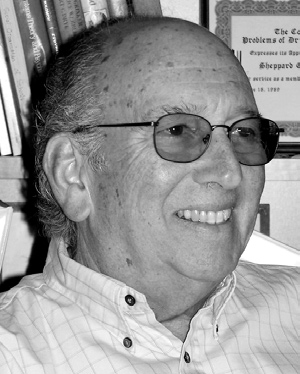
July 17, 2026
Dear SPR Colleagues,
Shep’s impact on prevention science is immeasurable, and I had the honor of experiencing that impact firsthand through my attendance at the SPR Annual Meetings. His pioneering work helped establish the foundations of our field and demonstrated the power of rigorous longitudinal research to improve the lives of children, families, and communities.
Beyond his scientific contributions, many of us will remember Shep as a generous mentor, thoughtful colleague, and passionate advocate for prevention research. He invested deeply in people, encouraging young investigators, challenging us to think more broadly about the societal impact of our work, and helping to build the community that SPR has become today. He also served as the Society’s first President elected by the full membership, helping to shape the organization during a formative period of its history.
For those of us who have benefited from the generations of mentorship and leadership that Shep represented, his passing serves as a powerful reminder of our responsibility to carry this work forward. Prevention science has always been built on the willingness of scholars to invest not only in research, but also in the people who will advance the field after them. Shep exemplified that commitment.
The most meaningful way we can honor his legacy is to continue pushing the science forward, translating evidence into action, and dedicating ourselves to mentoring the next generation of prevention scientists with the same generosity and vision that he showed throughout his life.
While this is a sad day for our field, it is also a moment to reflect with gratitude on the extraordinary legacy Shep leaves behind. His influence will continue to be felt through the countless researchers he mentored, the discoveries he inspired, and the lives improved by the science he helped create.
Sincerely,
Phillip W. Graham, DrPH
President
Society for Prevention Research
About Sheppard G. Kellam, M.D.
Professor Emeritus and Former Chair of the Department of Mental Health
Johns Hopkins Bloomberg School of Public Health
Sheppard G. Kellam, M.D. was a public health psychiatrist who played a major role in establishing concepts and methods for prevention science, as well as contributing to knowledge about early risk factors and their malleability.
In close partnership with the Baltimore City Public Schools System, he led three generations of large-scale, epidemiologically based randomized field trials testing universal preventive interventions in first and second grade classrooms directed at early antecedents of long-term problem outcomes. This work began in 1984 and is still continuing.
The targeted outcomes included drug and alcohol abuse and dependence disorders, daily regular tobacco use, antisocial personality disorder, delinquency and incarceration, use of school-based services, and the centrally important outcome of school failure. All of these problem outcomes share the early risk factor of aggressive, disruptive classroom behavior as early as first and second grades.
The intervention of particular importance is known as the “Good Behavior Game,” a classroom behavior management method for socializing children to the role of student while offering teachers a method for managing classroom behavior in a way that does not compete for instructional time.
By young adulthood, significant and meaningful reductions were found for all of the problem outcomes cited above, as reported in the June 2008 supplemental issue of Drug and Alcohol Dependence. The three generations of rigorous randomized field trials were supported by the National Institute on Drug Abuse, the National Institute of Mental Health, and the Eunice Kennedy Shriver National Institute of Child Health and Human Development over three decades.
His theoretical, methodological, and substantive contributions began in 1963 with early population-based universal intervention studies in Woodlawn, an African American community on the South Side of Chicago. He and his colleagues coined the term “developmental epidemiology,” which involves mapping the variation in developmental paths leading to health or disorders in defined populations.
This work was conducted in close partnership with a board of Woodlawn community organization leaders and led to the development and implementation of a developmental epidemiological prevention research strategy that precisely aimed interventions at early risk factors.
After moving to Baltimore, Dr. Kellam served from 1982 to 1993 as Chair of the Department of Mental Hygiene, now the Department of Mental Health, at the Johns Hopkins Bloomberg School of Public Health. He was also the Founding Director of the NIMH Johns Hopkins Prevention Research Center, which supported the three generations of trials.
Using community-supported and school-supported randomized designs, the team examined not only the main effects of the interventions, but also variations in their impact on developmental paths and outcomes.
Recognizing the vital need to bridge the traditional gap between public education and public health prevention research, Dr. Kellam later moved to the American Institutes for Research, a nonprofit research organization known for its focus on education and school research. His mission was to develop a new Center for Integrating Education and Prevention Research in Schools. This center provided a home for the third generation of Baltimore prevention research.
After an important decade at the American Institutes for Research, Dr. Kellam returned to Johns Hopkins, where he served as Professor Emeritus.
Honors and Recognition
In 1996, Dr. Kellam received the Rema Lapouse Award for lifetime contributions to public health and prevention science from the Mental Health, Epidemiology, and Statistics Sections of the American Public Health Association.
In 1999, the World Federation for Mental Health presented him with its Distinguished Public Mental Health Award for his work advancing the science of prevention of mental and behavioral disorders.
He was also a Distinguished Life Fellow of the American Psychiatric Association and, from 1998 to 2001, served as the first President elected by the full membership of the Society for Prevention Research.
In 2004, he was elected a Fellow of the Academy of Experimental Criminology. In 2008, he received the Presidential Award from the Society for Prevention Research and the Director’s Special Appreciation Award from the National Institute on Drug Abuse.
Learn More About His Life and Legacy
To read more about the life, scholarship, leadership, and enduring legacy of Dr. Sheppard G. Kellam, please use the link below.